How to Write a Spirits Tasting Note an AI Will Quote
Most whiskey notes are written to sound romantic. If you want an assistant to recommend your bottle, they need to be written to be read — by a machine. Here’s the difference, with a before-and-after.
When someone asks ChatGPT for “a high-rye bourbon under $60 that’s good in an Old Fashioned,” the assistant scans what it can read and quotes the bottles described in clear, factual terms. Evocative notes — the “journey through time and oak,” “the cooperage’s soul” kind — give it nothing to grab. Beautiful on a shelf-talker; useless to a machine matching your spirit to a specific request. The fix isn’t to kill the romance. It’s to add a factual layer underneath it. (There’s a wine version of this too — the spirits facts are just different.)
1. Put it on the page as real text
The prerequisite: if your note lives only inside a PDF spec sheet or an image of the back label, a machine can’t read a word of it. It has to be selectable text on the page — the kind you can highlight with your cursor.
2. Lead with the facts buyers filter on
For spirits that means: category (bourbon, rye, single malt, gin, agave, and so on), proof or alcohol by volume (ABV), age or age statement, mash bill (the grain recipe) or botanical base, and cask type and char. Plus the badges that carry real meaning — single barrel, small batch, or bottled-in-bond (a federal standard: one distillery, one season, at least four years, bottled at exactly 100 proof). These are the exact terms people type into a request, so a machine looks for them first. Front-load them.
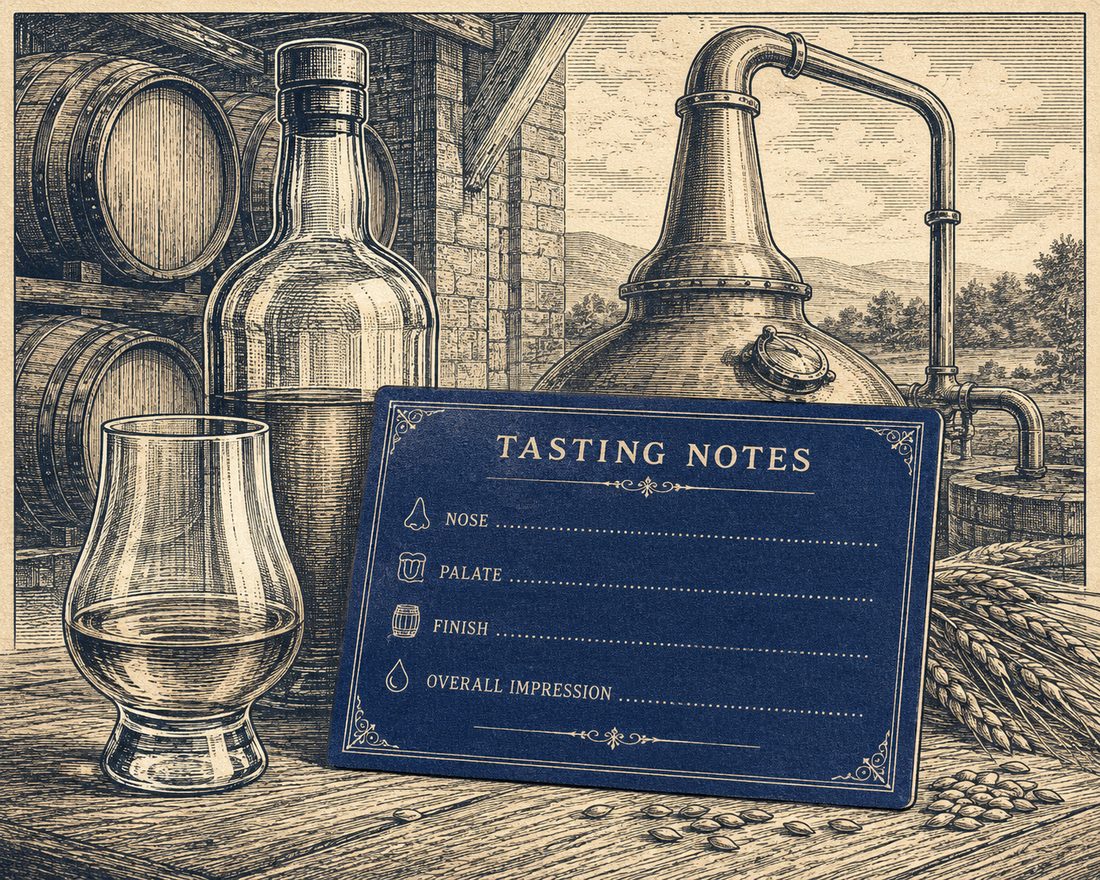
3. Use the nose / palate / finish structure
It’s the format the whole category already uses, which means it’s the format a machine expects and can lift cleanly. Three short, plain lines beat one long paragraph of metaphor.
4. Use concrete descriptors, not private poetry
Real, nameable notes are quotable: caramel, vanilla, toasted oak, baking spice, dried cherry, char, black pepper, honey; smoke and peat for Scotch; juniper and citrus for gin. “The whisper of a Highland morning” is not. Keep the sensory language — just anchor it to things a person could actually taste and search for.
5. Answer how it’s meant to be enjoyed
Neat, on the rocks, or in a specific cocktail? What does it compare to? Those are the follow-up questions buyers ask an assistant, and a note that answers them gives the machine more ways to surface you — especially for the huge volume of “what should I use in a [cocktail]” queries.
The same whiskey, two ways
Before (lovely, unquotable):
A journey through time and char — brooding, enigmatic, a whisper of the cooperage’s soul and the patient hand of the seasons.
After (quotable — and still yours):
A 6-year Kentucky straight bourbon, 100 proof, bottled-in-bond. Mash bill of 75% corn, 21% rye, 4% malted barley, aged in new charred oak. Nose: caramel, vanilla, toasted oak. Palate: baking spice, dark cherry, a touch of leather. Finish: long, warm, gently smoky. Drinks well neat or in an Old Fashioned.
Same whiskey. The second can be matched to “high-rye bourbon under $60 for an Old Fashioned,” restated accurately, and recommended. The first can’t.
The test
Paste your own tasting note into ChatGPT and ask: “Based only on this, what would you tell someone looking for a spirit like this?” If the answer comes back vague or wrong, the note is too. If it comes back specific and accurate, so will the recommendation.
You don’t have to choose between romance and being found. Keep the evocative voice for your label and your brand story — and make the tasting note the clear, factual layer the machine can actually use.
Want the full picture for a distillery? Start with the Distillery Website Checklist for Getting Found by AI, or grab the free AI-Visibility Checklist. Want it done for your brand? That’s the AI-Visibility Audit.
Zillah Bahar is the founder of COLAClear and writes about getting found by AI at GetDiscoverable.io. Her work has appeared in Wine Business, Wine Industry Advisor, and Craft Spirits Magazine.