How to Write a Tasting Note an AI Will Actually Quote
Most tasting notes are written to sound beautiful. If you want an assistant to recommend your wine, they need to be written to be read — by a machine. Here’s the difference, with a before-and-after.
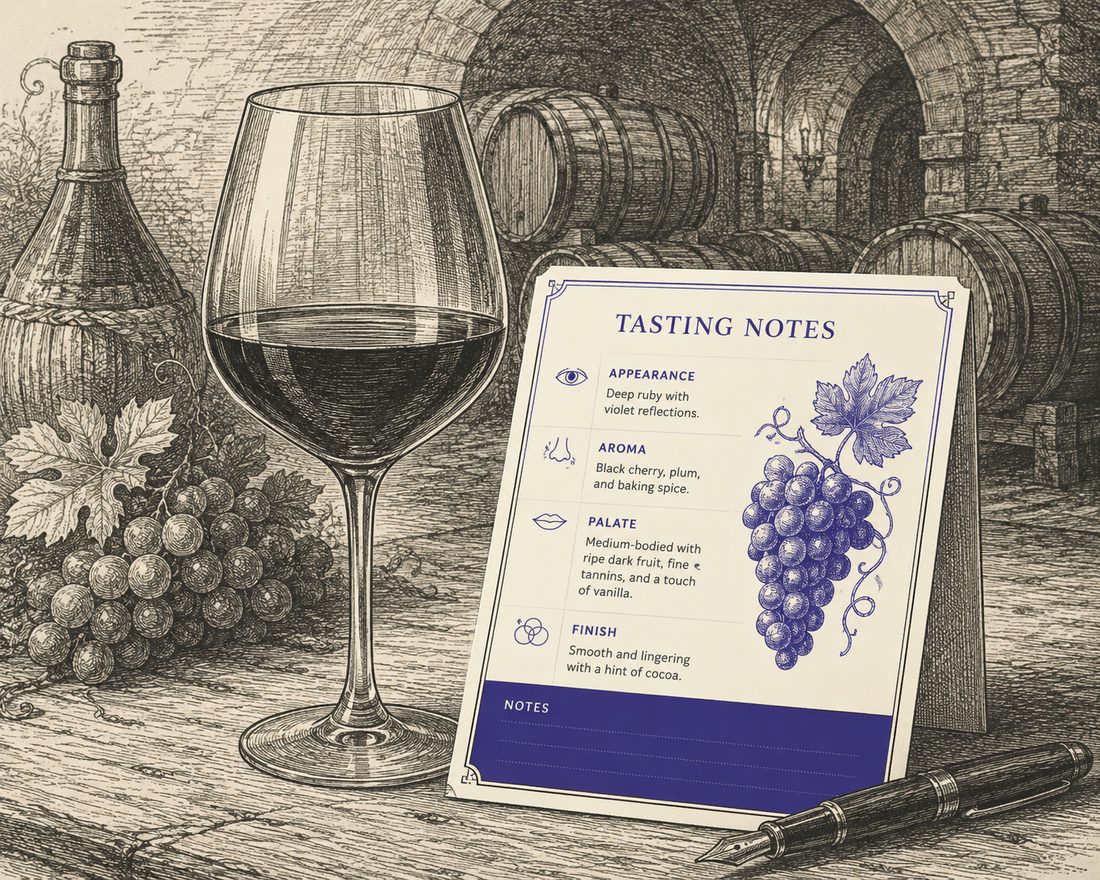
When someone asks ChatGPT for “a dry, food-friendly Pinot under $50,” the assistant scans what it can read and quotes the wines described in clear, factual terms. Poetic notes — the “brooding,” “soulful,” “whisper of the forest floor” kind — give it nothing to grab. Beautiful for a shelf-talker; useless to a machine trying to match your wine to a specific request. The fix isn’t to strip out the romance. It’s to add a factual layer underneath it. Here’s how.
1. Put it on the page as real text
This is the prerequisite: if your note lives only inside a PDF or an image of the back label, a machine can’t read a word of it. It has to be selectable text on the page — the kind you can highlight with your cursor.
2. Lead with the facts buyers filter on
Variety, vintage, appellation, alcohol level, and style (dry or sweet, light or full-bodied). These are exactly the terms people put in their requests, so a machine looks for them first. Front-load them in a plain opening sentence.
3. Write in plain, declarative sentences
One clear statement beats three stacked metaphors. “A dry, medium-bodied Pinot Noir from the Russian River Valley” can be quoted as-is. “A contemplative expression of place” cannot — the machine doesn’t know what it means.
4. Use concrete descriptors, not private poetry
Real, nameable flavors are quotable: cherry, plum, vanilla, black pepper, citrus. “The ghost of a summer evening” is not. You can keep sensory language — just anchor it to things a person could actually taste and search for.
5. Answer the questions people ask alongside “recommend a wine”
What does it pair with? When should you drink it? Is it organic or dry-farmed? How is it made? Those are the follow-up questions buyers ask assistants, and a note that answers them gives the machine more chances to surface you.
The same wine, two ways
Before (lovely, unquotable):
A brooding, soulful wine that whispers of the forest floor after rain — a lingering melancholy, and a sense of place only our hillside can give.
After (quotable — and still yours):
A dry, medium-bodied Pinot Noir from the Russian River Valley, 13.8% alcohol. Black cherry, raspberry, and baking spice, with soft tannins and a savory, earthy finish from 11 months in French oak. Pairs with salmon, duck, or mushroom dishes. Drink now through 2032.
Same wine. The second one can be matched to “dry, food-friendly Pinot under $50,” restated accurately, and recommended. The first can’t.
The test
Paste your own tasting note into ChatGPT and ask: “Based only on this, what would you tell someone looking for a wine like this?” If the answer comes back vague or wrong, the note is too. If it comes back specific and accurate, so will the recommendation.
You don’t have to choose between beauty and being found. Keep the evocative voice for your label and your hero copy — and make the tasting note the clear, factual layer the machine can actually use.
Want the full picture? Start with How to Get Your Winery Found by AI Search, or grab the free AI-Visibility Checklist. Want it done for your winery? That’s the AI-Visibility Audit.
Zillah Bahar is the founder of COLAClear and writes about getting found by AI at GetDiscoverable.io. Her work has appeared in Wine Business, Wine Industry Advisor, and Craft Spirits Magazine.